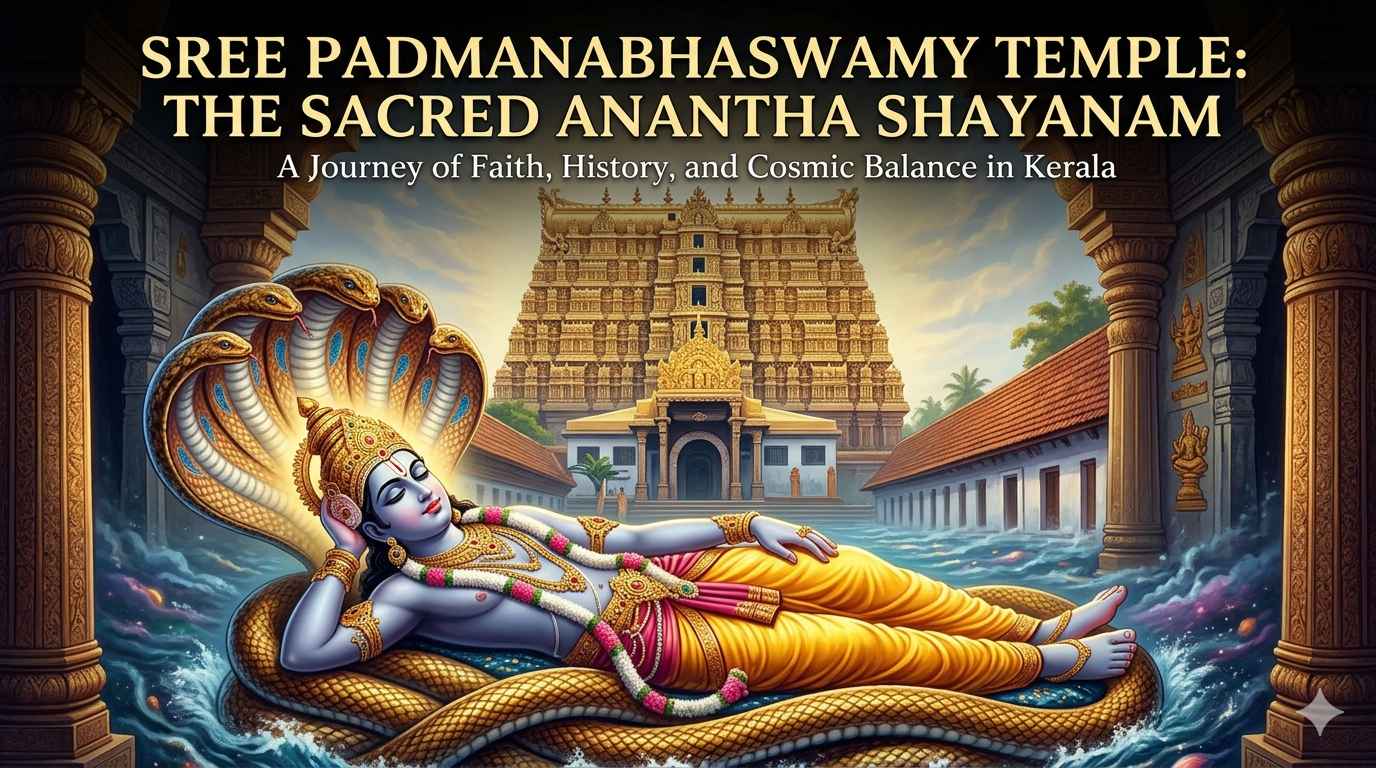
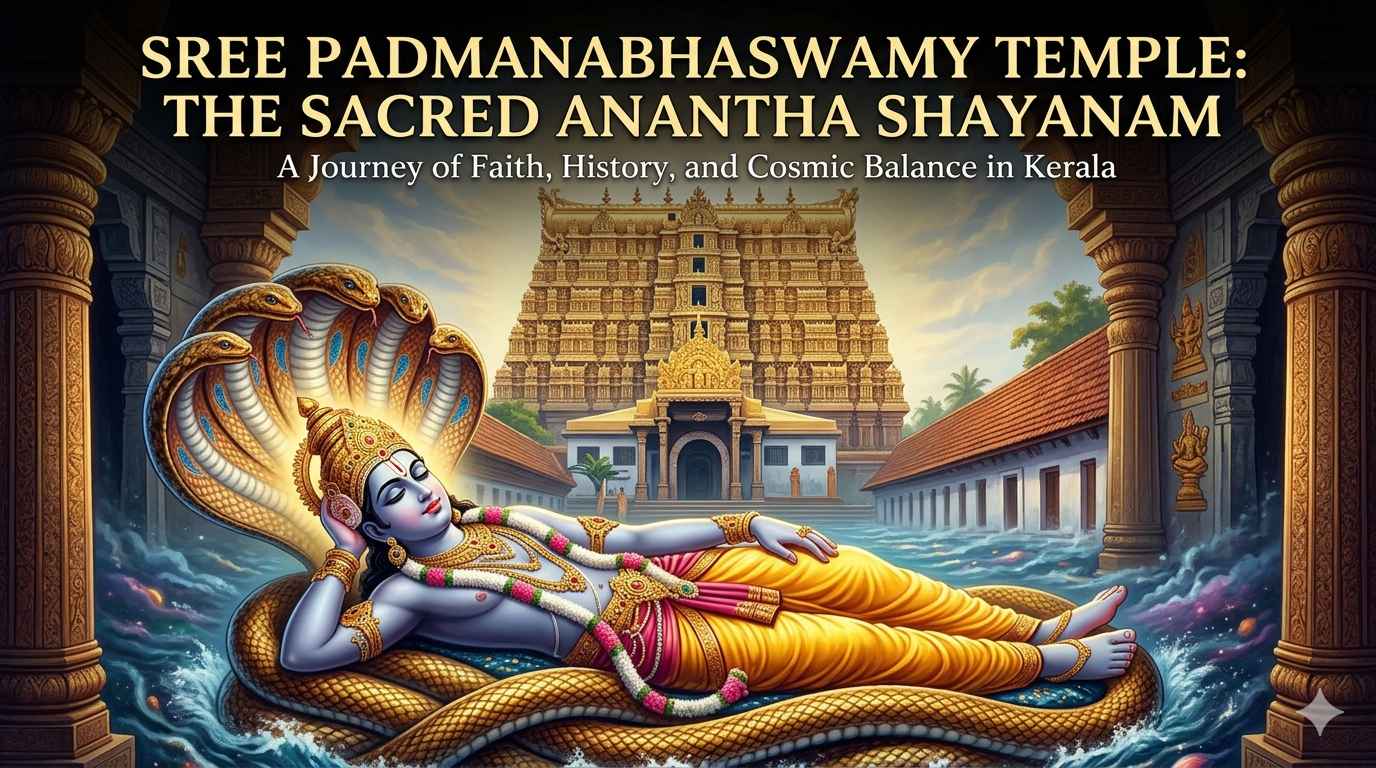
Sree Padmanabhaswamy Temple in Thiruvananthapuram, Kerala is a sacred Vishnu temple known for its unique reclining idol, rich history, strict traditions, and immense spiritual significance.
✨ Last updated: April 2026
Overview
Sree Padmanabhaswamy Temple, located in Thiruvananthapuram, is one of the most revered and ancient temples dedicated to Lord Vishnu in India. The deity is worshipped in the unique Anantha Shayanam posture, where Lord Vishnu reclines on the serpent Adishesha, symbolizing cosmic balance and preservation. This temple is one of the 108 Divya Desams, making it highly significant among Vaishnavites and devotees across the country.
The temple is globally recognized not only for its spiritual importance but also for its immense hidden wealth discovered in underground vaults, making it one of the richest temples in the world. Managed by the Travancore royal family, the temple follows strict rituals, traditional dress codes, and age-old customs that preserve its sanctity. The architecture is a stunning blend of Dravidian and Kerala styles, featuring a majestic gopuram, intricate carvings, and long pillared corridors.
Devotees visit throughout the year seeking blessings for prosperity, peace, and protection. The temple also hosts grand festivals like Alpasi and Painkuni, attracting thousands of pilgrims. Its spiritual aura, cultural richness, and historical importance make it a must-visit temple in Kerala.
The temple is globally recognized not only for its spiritual importance but also for its immense hidden wealth discovered in underground vaults, making it one of the richest temples in the world. Managed by the Travancore royal family, the temple follows strict rituals, traditional dress codes, and age-old customs that preserve its sanctity. The architecture is a stunning blend of Dravidian and Kerala styles, featuring a majestic gopuram, intricate carvings, and long pillared corridors.
Devotees visit throughout the year seeking blessings for prosperity, peace, and protection. The temple also hosts grand festivals like Alpasi and Painkuni, attracting thousands of pilgrims. Its spiritual aura, cultural richness, and historical importance make it a must-visit temple in Kerala.
Live Darshan & Video
History & Significance
Sree Padmanabhaswamy Temple in Thiruvananthapuram has a long and layered history, with references going back to ancient Hindu texts and regional traditions. It is one of the 108 Divya Desams, which already places it among the most respected Vishnu temples in the country. For centuries, it has been a quiet but powerful spiritual center where daily rituals and traditions have continued without major interruption.
The temple became even more prominent during the reign of Marthanda Varma in the 18th century. Instead of ruling as a typical monarch, he dedicated his entire kingdom to Lord Padmanabha in a symbolic act called “Thrippadi Danam.” From that point, the royal family considered themselves servants of the deity rather than rulers, and this tradition still continues today.
In recent times, the temple drew global attention after the discovery of its underground vaults filled with gold, ornaments, and rare artifacts. While that brought curiosity from around the world, for devotees the temple has always been about faith, discipline, and tradition. The strict dress code, controlled entry, and unique form of the deity all add to its importance, making it not just historically rich but spiritually intense as well.
The temple became even more prominent during the reign of Marthanda Varma in the 18th century. Instead of ruling as a typical monarch, he dedicated his entire kingdom to Lord Padmanabha in a symbolic act called “Thrippadi Danam.” From that point, the royal family considered themselves servants of the deity rather than rulers, and this tradition still continues today.
In recent times, the temple drew global attention after the discovery of its underground vaults filled with gold, ornaments, and rare artifacts. While that brought curiosity from around the world, for devotees the temple has always been about faith, discipline, and tradition. The strict dress code, controlled entry, and unique form of the deity all add to its importance, making it not just historically rich but spiritually intense as well.
Deities & Presiding Gods
The main deity is Lord Vishnu as Padmanabha Swamy, reclining on Adishesha in the Anantha Shayanam posture. Goddess Lakshmi (Sridevi) and Bhudevi are also worshipped, along with other sub-deities within the temple complex.
- Idol made of 108 salagramams
- Viewable through three separate doors
- Massive 7-tier gopuram
- Intricate stone carvings and long corridors
- Idol made of 108 salagramams
- Viewable through three separate doors
- Massive 7-tier gopuram
- Intricate stone carvings and long corridors
Festivals & Rituals
The temple celebrates major festivals like Alpasi and Painkuni with grand processions, traditional rituals, and cultural performances. Daily poojas, deeparadhana, and special offerings are conducted with strict discipline, preserving centuries-old temple customs and spiritual practices.
Dress Code (Strict)
Men: Dhoti (Mundu) – No shirts inside
Women: Saree / Traditional attire
No western outfits allowed inside temple
Dress Code (Strict)
Men: Dhoti (Mundu) – No shirts inside
Women: Saree / Traditional attire
No western outfits allowed inside temple
How to Reach
Sree Padmanabhaswamy Temple in Thiruvananthapuram is easily accessible by air, rail, and road. The nearest airport is just 4 km away, while the central railway station is around 1 km from the temple.
Nearest Airport: Trivandrum International Airport (4 km)
Nearest Railway Station: Thiruvananthapuram Central (1 km)
Easily accessible by road and local transport
Nearest Airport: Trivandrum International Airport (4 km)
Nearest Railway Station: Thiruvananthapuram Central (1 km)
Easily accessible by road and local transport
Temple Timings
Morning Darshan | 3:30 AM – 12:00 PM
Evening Darshan | 5:00 PM – 7:30 PM
Note: Timings may vary during festivals. Darshan waiting time can range from 30 minutes to 2 hours depending on crowd, especially during weekends and festivals.
Evening Darshan | 5:00 PM – 7:30 PM
Note: Timings may vary during festivals. Darshan waiting time can range from 30 minutes to 2 hours depending on crowd, especially during weekends and festivals.
Spiritual Experience
Visiting Sree Padmanabhaswamy Temple in Thiruvananthapuram feels deeply immersive from the moment you step inside. The atmosphere is calm yet powerful, with the sound of chants, temple bells, and traditional rituals creating a strong spiritual presence. As you move through the long stone corridors and approach the sanctum, there is a natural sense of silence and focus that sets in.
The darshan itself is unique, as the deity of Lord Padmanabha is viewed through three separate doors, revealing different parts of the reclining form. This experience feels slow and intentional, allowing devotees to absorb the moment rather than rush through it. The strict dress code and temple discipline further add to the feeling that you are entering a sacred, preserved space untouched by modern distractions.
Many visitors describe a sense of peace and grounding after the visit, whether they come with strong religious beliefs or simple curiosity. It’s not just about seeing the temple, but about feeling connected to something timeless, where tradition, devotion, and quiet reflection come together naturally.
Important Tips
- Mobile phones and cameras are not allowed inside
- Follow strict security and temple rules
- Plan early morning visit for less crowd
- VIP darshan is limited and controlled
Nearby Attractions
- Padmatheertham Tank
- Kuthira Malika Palace
- Napier Museum
The darshan itself is unique, as the deity of Lord Padmanabha is viewed through three separate doors, revealing different parts of the reclining form. This experience feels slow and intentional, allowing devotees to absorb the moment rather than rush through it. The strict dress code and temple discipline further add to the feeling that you are entering a sacred, preserved space untouched by modern distractions.
Many visitors describe a sense of peace and grounding after the visit, whether they come with strong religious beliefs or simple curiosity. It’s not just about seeing the temple, but about feeling connected to something timeless, where tradition, devotion, and quiet reflection come together naturally.
Important Tips
- Mobile phones and cameras are not allowed inside
- Follow strict security and temple rules
- Plan early morning visit for less crowd
- VIP darshan is limited and controlled
Nearby Attractions
- Padmatheertham Tank
- Kuthira Malika Palace
- Napier Museum
Sree Padmanabhaswamy Temple is not just a place of worship but a timeless spiritual landmark that reflects tradition, discipline, and devotion. Its unique rituals, rich history, and powerful presence make it a must-visit temple in Kerala.
Padmanabhaswamy temple timings today , Padmanabhaswamy temple online booking
Padmanabhaswamy temple timings today , Padmanabhaswamy temple online booking
Photo Gallery
Frequently Asked Questions
Quick Details
Temple Name: Sree Padmanabhaswamy Temple
Location: Thiruvananthapuram
Deity: Lord Vishnu (Padmanabha Swamy)
Temple Type: Divya Desam
Darshan Timings: 3:30 AM – 12:00 PM, 5:00 PM – 7:30 PM
Entry Rule: Only Hindus allowed
Dress Code: Traditional attire (Dhoti for men, Saree for women)
Famous For: Anantha Shayanam idol, temple treasure vaults
Nearest Airport: Trivandrum International Airport (4 km)
Nearest Railway Station: Thiruvananthapuram Central (1 km)
Best Time to Visit: Early morning or during festivals
Main Festivals: Alpasi, Painkuni
Temple Authority: Travancore Royal Family
Location: Thiruvananthapuram
Deity: Lord Vishnu (Padmanabha Swamy)
Temple Type: Divya Desam
Darshan Timings: 3:30 AM – 12:00 PM, 5:00 PM – 7:30 PM
Entry Rule: Only Hindus allowed
Dress Code: Traditional attire (Dhoti for men, Saree for women)
Famous For: Anantha Shayanam idol, temple treasure vaults
Nearest Airport: Trivandrum International Airport (4 km)
Nearest Railway Station: Thiruvananthapuram Central (1 km)
Best Time to Visit: Early morning or during festivals
Main Festivals: Alpasi, Painkuni
Temple Authority: Travancore Royal Family
Morning Darshan | 3:30 AM – 12:00 PM
Evening Darshan | 5:00 PM – 7:30 PM
Note: Timings may vary during festivals. Darshan waiting time can range from 30 minutes to 2 hours depending on crowd, especially during weekends and festivals.
Evening Darshan | 5:00 PM – 7:30 PM
Note: Timings may vary during festivals. Darshan waiting time can range from 30 minutes to 2 hours depending on crowd, especially during weekends and festivals.